• Ultralight sleeping bags

  • An ultralight sleeping bag solves three problems at once: weight, bulk and recovery. You carry fewer grams, your pack volume drops, and you still get reliable warmth through the night. On real trips this means faster approaches in the Alps, smoother transitions on bikepacking routes, and more energy for long summit pushes. Choose a lightweight sleeping bag that is truly packable and compressible, not just light on paper.

Filter By

Ultralight bag vs lightweight sleeping bag for hiking

Weight is only part of the story. In practice you choose between:

- ultralight bags (≤ 450–500 g) for fast & light routes, where every gram and cubic centimetre matter,
- lightweight bags (~500–900 g) that add insulation and durability for colder seasons.

A lightweight compressible sleeping bag with high fill power can outperform heavier alternatives. Always check total weight, fill weight, shell fabric and packed size — these factors directly affect performance on long, demanding routes.

Compact & small sleeping bags that fit anywhere

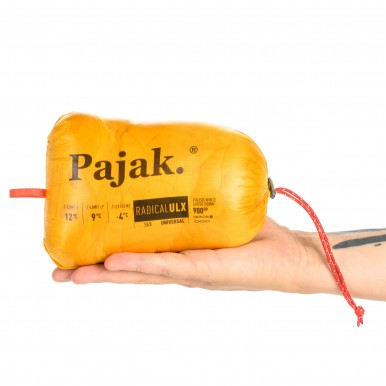
“Compact” should be measurable. Sack dimensions decide if the bag fits a 20–40 L alpine pack or a bikepacking fork cage. For example:

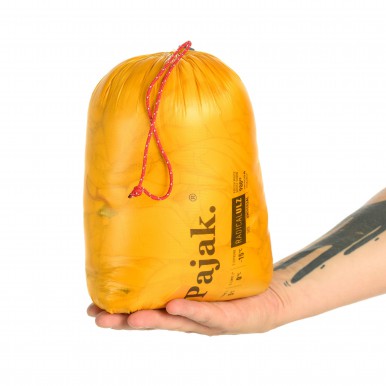
- Radical 1Z: ~26 × 15 cm,
- Radical 4Z: ~29 × 18 cm.

These sizes make them genuine small sleeping bags or sleeping bags that pack small, fitting efficiently into minimalist setups.

Lightweight down sleeping bag – why down always wins

For serious distance and elevation, a lightweight down sleeping bag offers the best warmth-to-weight and packability. PAJAK uses only RDS-certified down sourced in Europe:

- 900 CUIN goose down in Radical ULX, ULZ, 1Z and 4Z,
- 700 CUIN down in Core 250 and Core 400.

Stable baffles prevent cold spots, while shell fabrics — GELANOTS Ultra Light Rip Stop (Radical series) and TORAY Airtastic SLF15 DWR (Core series) — combine ultralight performance with durability and moisture resistance. Waterproof-coated inserts in Radical 4Z and Core models help protect insulation in contact zones.

Choose your lightweight sleeping bag: hiking, camping, travel

Hiking: choose a lightweight sleeping bag hiking model like ULZ or 1Z, where low weight and quick loft recovery matter.

Camping: a lightweight camping sleeping bag such as Core 400 balances warmth with tougher fabrics and moisture-resistant details.

Travel: the lightweight travel sleeping bag Core 250 (420 g) is compact enough for trains and hostels, while the Quest Blanket Light functions well in huts and summer conditions.

PAJAK ultralight sleeping bags – model guide for packable gear

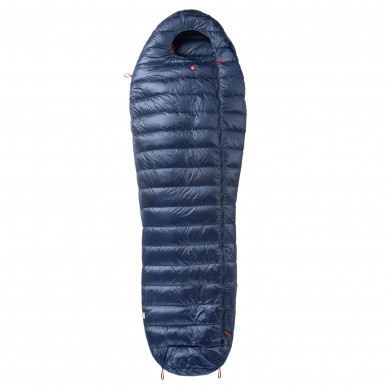
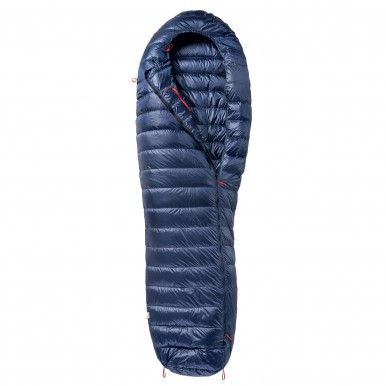
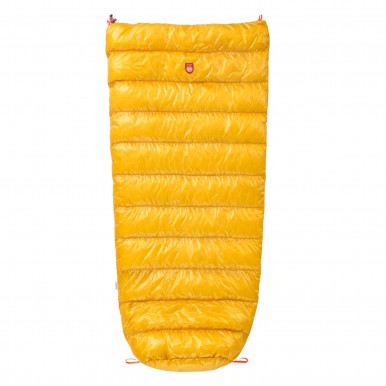
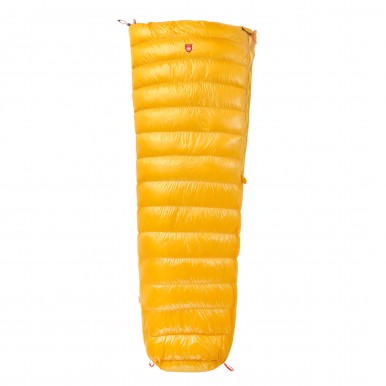
- Radical ULX (9 °C) — ~190 g, 900 CUIN goose down. Lower-body ultralight module that can be paired with a jacket; the definition of a small pack sleeping bag.
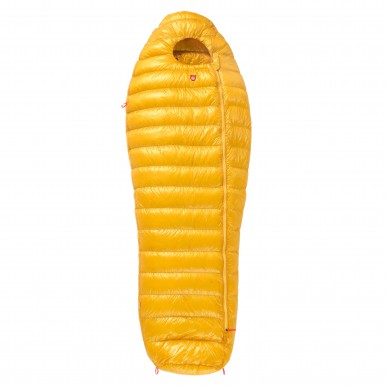
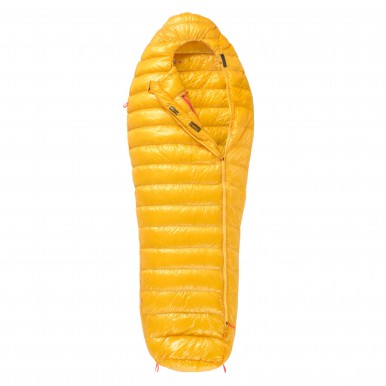
- Radical ULZ (0 °C) — ~325 g, 900 CUIN goose down; stable 3D baffles, snag-resistant zipper system. Can also be used as an insert in a regular sleeping bag.
- Radical 1Z (0 °C) — ~440 g (Regular), 900 CUIN goose down; sack ~26×15 cm. A reference packable sleeping bag for alpine summer use and shoulder-season hikes.
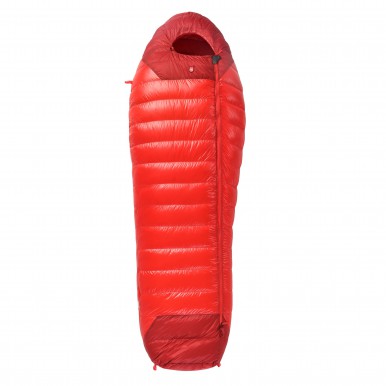
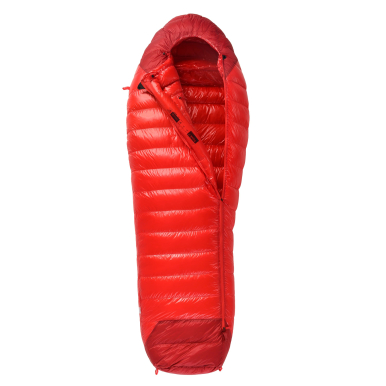
- Radical 4Z (–7 °C) — ~720 g (Regular), 900 CUIN goose down; 3D zipper/collar baffles plus waterproof inserts in hood/foot; sack ~29×18 cm.
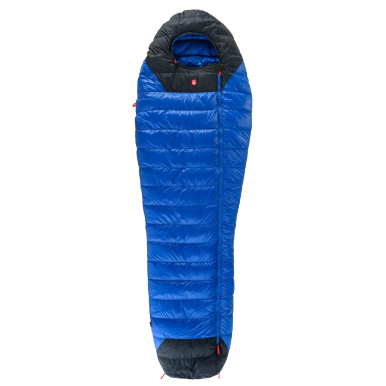
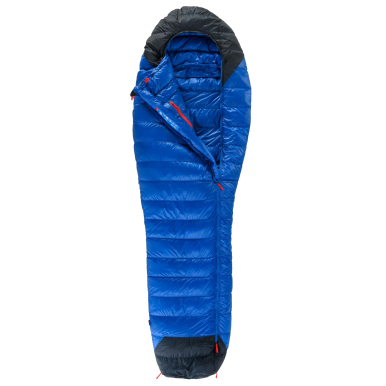
- Core 250 (12 °C) — ~420 g (Regular), 700 CUIN duck down; TORAY Airtastic DWR shell. An ideal lightweight compact sleeping bag for travel and warm trekking.
- Core 400 (–6 °C limit / 0 °C comfort) — ~800 g (Regular), 700 CUIN duck down; durable shell with waterproof reinforcements at hood/foot. A versatile three-season option.
- Quest Blanket Light (9 °C) — down blanket for huts and warm nights; doubles as a booster over a sleeping bag.

Fit and sizing for real performance

Small sleeping bags should not mean too short. Choose Short / Regular / Long to match your body dimensions. A Long Radical 1Z, for example, adds only ~20 g over Regular but prevents cold spots for taller users. Correct fit improves thermal efficiency as much as fill power.

Moisture protection in the field

Ultralight down must cope with condensation and damp ground. DWR-treated shells and waterproof hood/foot inserts protect insulation in exposed areas. Always air the bag daily, store it uncompressed between trips, and use a liner for extended expeditions. This keeps a lightweight packable sleeping bag performing season after season.

Low weight sleeping bag care and storage

Use the supplied storage sack at home; compression sacks are for transport only. Wash with down-specific detergents and dry thoroughly to restore loft. This routine extends the life of any low weight sleeping bag in your kit.

Ultralight sleeping bags that balance weight, size and warmth

An ultralight sleeping bag is designed to reduce both weight and bulk, making it a truly compact solution that fits easily into minimalist setups. Models like the ULX or 1Z can vanish into a side pocket or bikepacking cage, while a lightweight down sleeping bag such as the Radical 4Z or Core 400 delivers dependable warmth on colder nights.

Your choice depends on the trip: for fast hikes, the ULZ or 1Z work perfectly as lightweight hiking sleeping bags; for camping, the Core 400 offers extra insulation and moisture resistance; and for travel, the Core 250 is a reliable lightweight sleeping bag for hostels and short journeys. In every case, a packable sleeping bag helps you carry less and sleep comfortably wherever you stop for the night.