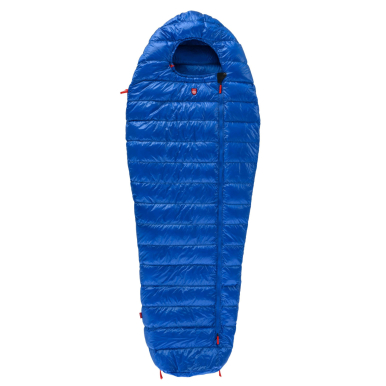
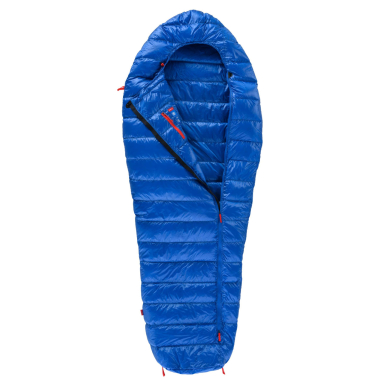
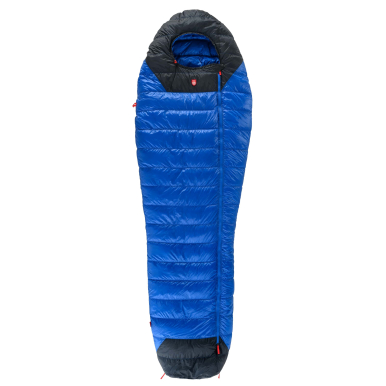
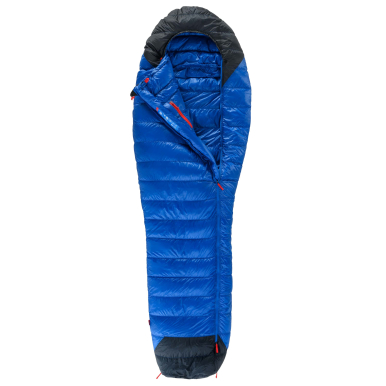
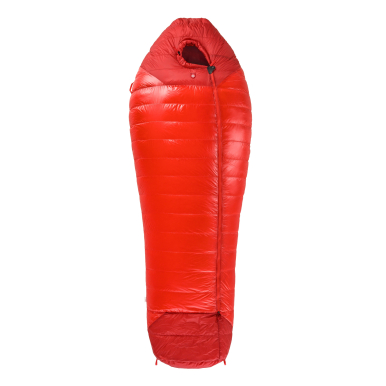
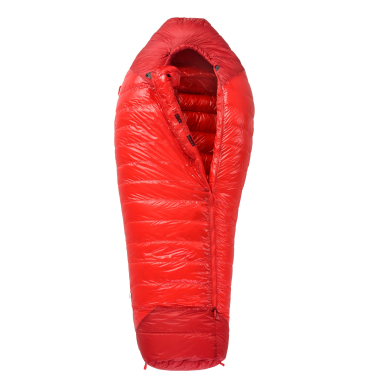
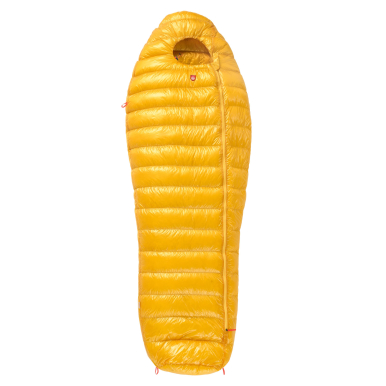
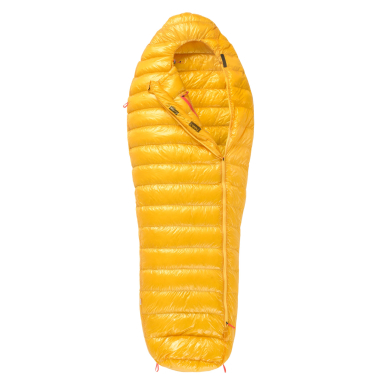
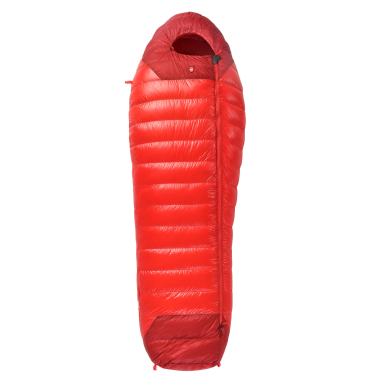
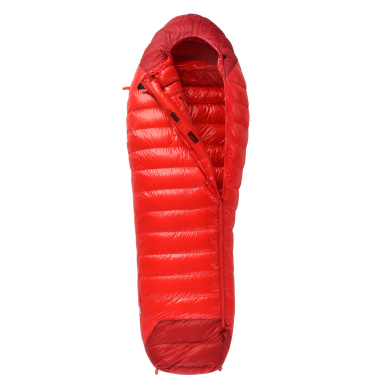
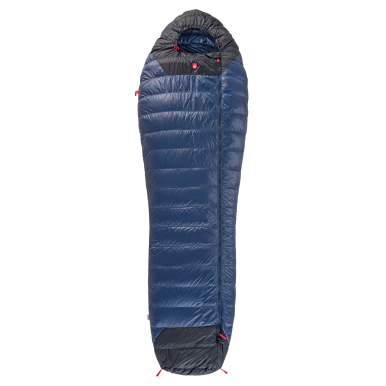
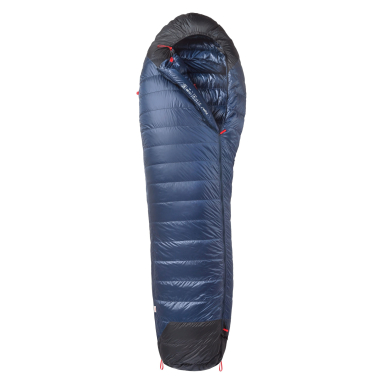
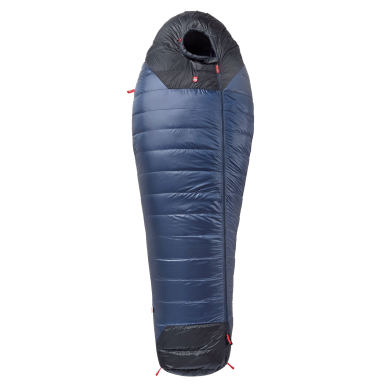
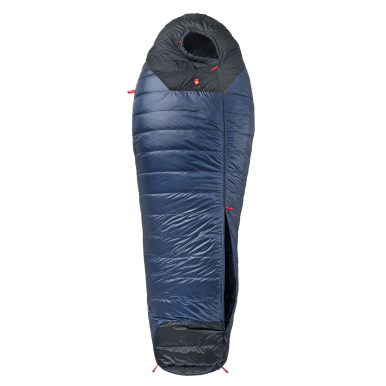
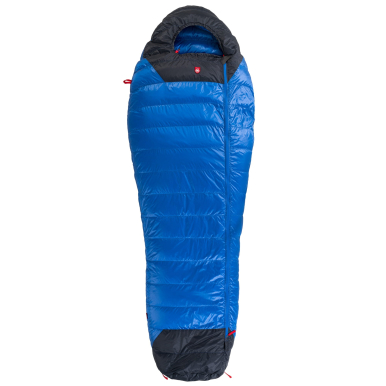
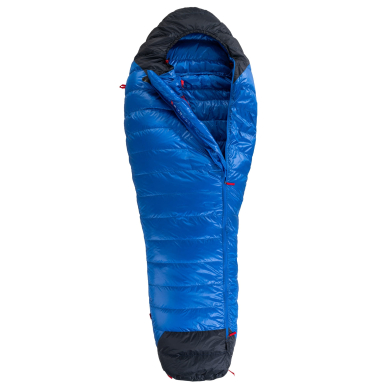
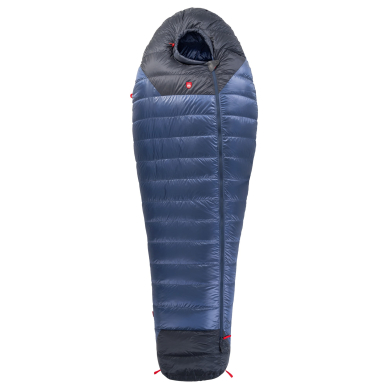
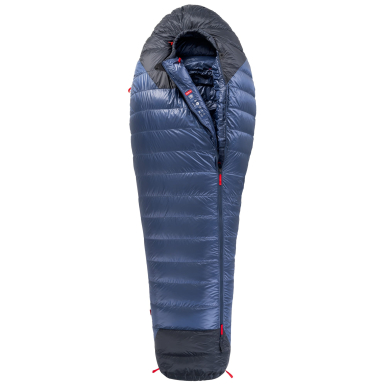
Why a mummy style sleeping bag is more efficient
By reducing empty space around the torso and legs, a mummy shape sleeping bag traps heat faster and wastes fewer calories. A snug shoulder line, a 3D hood and an anatomically cut footbox reduce cold spots and drafts — exactly what you want when temperatures drop at altitude.
Down mummy sleeping bag vs synthetic: what matters on the trail
For multi-day routes where every gram counts, a down mummy sleeping bag delivers the best warmth-to-weight and compressibility. In PAJAK’s range you’ll find high-fill, RDS-certified 900 cuin down in the Radical series and durable 700 cuin duck down in the Core series.
Lightweight or winter mummy sleeping bag?
Pick by temperature, weight and trip style — here’s how the current PAJAK range maps to common use-cases:
- Lightweight mummy bag (fast & light, late spring to early autumn): Radical 1Z (0°C) — 440 g, 900 FP goose down.
- All-round, colder seasons and light winter with skills: Radical 4Z (–7°C, 720 g) — 900 FP goose down, 3D down-filled zipper and collar baffles, waterproof-coated inserts in hood/foot.
- Versatile performance with hard-wearing spec: Core 400 (–6°C) — 800 g, fill 470 g, 700 CUIN 90/10 duck down, TORAY Airtastic SLF15 DWR shell; waterproof reinforcements in hood/foot.
- Winter mummy sleeping bag (deep cold, multi-day winter routes): Core 950 (–18°C) — fill 1050 g, ~1400 g total, 700 CUIN 90/10 duck down, TORAY Airtastic SLF15 DWR.
- Expedition-grade extreme cold: Radical 16H — 900 FP goose down with IRL (Infrared Reflection Layer); 1500 g, fill 1050 g. Temperature ratings: comfort –31°C / limit –43°C / extreme –73°C (ISO 23537).
 by Pajak